BakeShop
BakeShop is a mobile application concept designed to modernize the traditional bread purchasing experience through a more convenient and flexible digital workflow.
The project focused on reducing waiting times, simplifying the ordering process, and allowing users to customize bread selections, schedule deliveries, and place multiple-item or large-volume orders more efficiently.
The platform was designed to bridge traditional bakery culture with a faster and more accessible user experience tailored to modern daily routines.
Challenges in Traditional Bread Purchasing
Traditional bread purchasing often involves long physical queues, inefficient ordering processes, and limited customer flexibility.
Users typically cannot customize bread selections, combine multiple bread types in a single order, or schedule deliveries within preferred time windows. These limitations create friction for users who rely on fast, time-sensitive daily purchases.
The lack of a streamlined digital experience also reduces overall convenience and purchasing efficiency.
Modernizing the Bread Ordering Experience
The goal of this project was to design a more accessible and user-centered bakery experience that simplifies bread ordering through a faster and more flexible digital workflow.
The solution focused on reducing queue-related friction, improving delivery coordination, supporting customizable orders, and creating a more seamless purchasing experience for both individual and organizational users.
Research & Insights
The initial direction for BakeShop was shaped through personal observation of traditional bakery purchasing behavior and recurring inefficiencies in the ordering experience.
Key insights highlighted the frustration caused by long waiting times, limited ordering flexibility, and the lack of convenient delivery scheduling options for users with structured daily routines.
These observations informed the platform’s interaction structure, delivery flow, and overall user experience direction.
“Every minute is planned the day before, even the simplest service must be accurate and reliable.”
Approach
The design approach focused on simplifying the bread ordering experience, reducing friction in purchase flows, and enabling a more flexible system for both personal and bulk orders.
Focus:
- Simplifying ordering and customization flows to support faster decision-making
- Improving delivery scheduling clarity through structured time selection
- Supporting flexible purchasing behaviors, including mixed and bulk orders
Wireframing
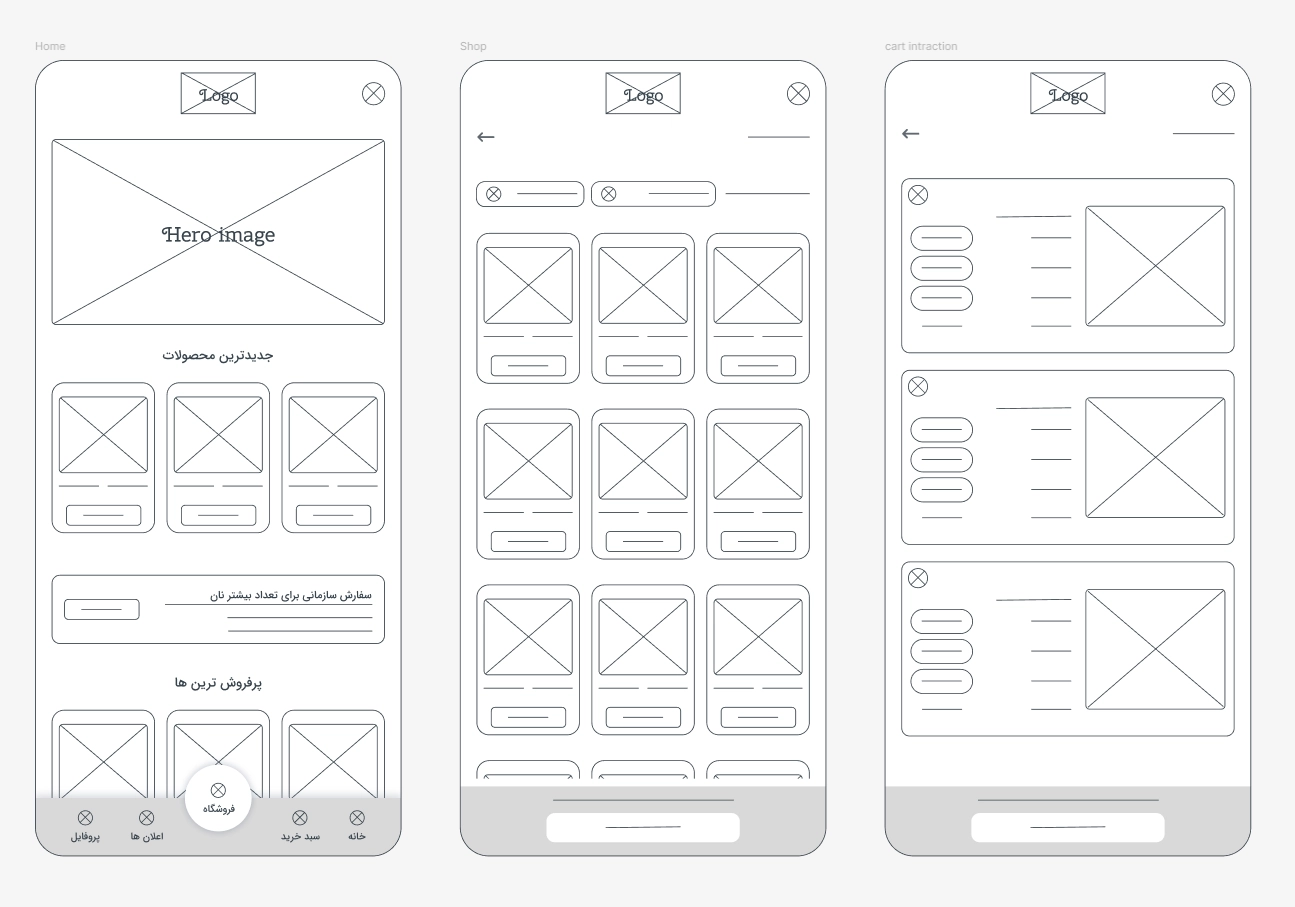
Wireframes focused on structuring the ordering flow around speed, clarity, and ease of use across key interactions.
Special attention was given to product customization, mixed-order management, delivery scheduling, and reducing unnecessary steps in the purchase process.
Low-Fidelity Exploration
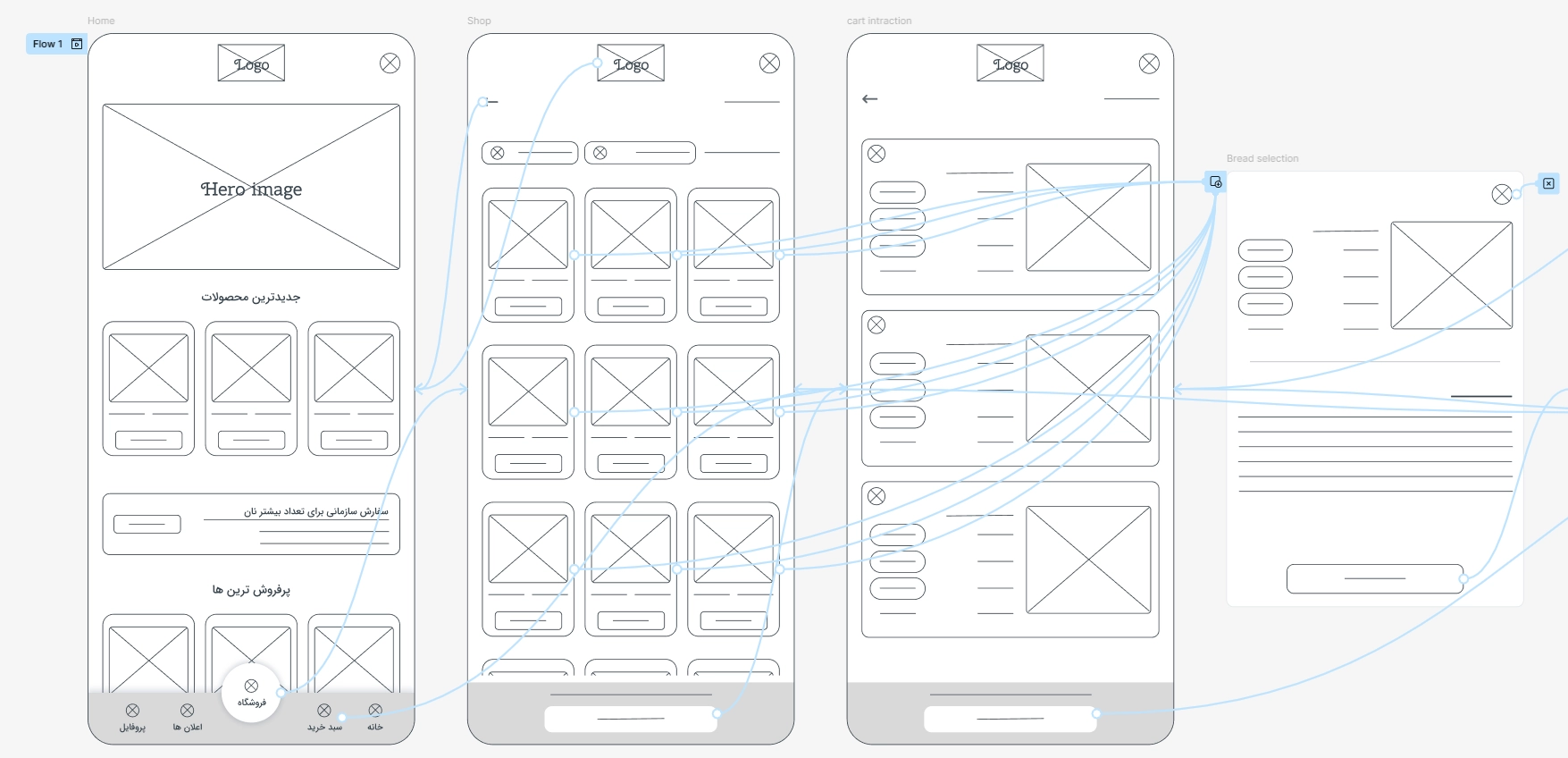
Low-fidelity explorations were used to refine navigation structure, ordering flows, and content hierarchy before moving into more detailed interface design.
The focus remained on minimizing friction and ensuring that key actions could be completed quickly and intuitively.
“I like to do my own work, as long as the tools are simple and reliable.”
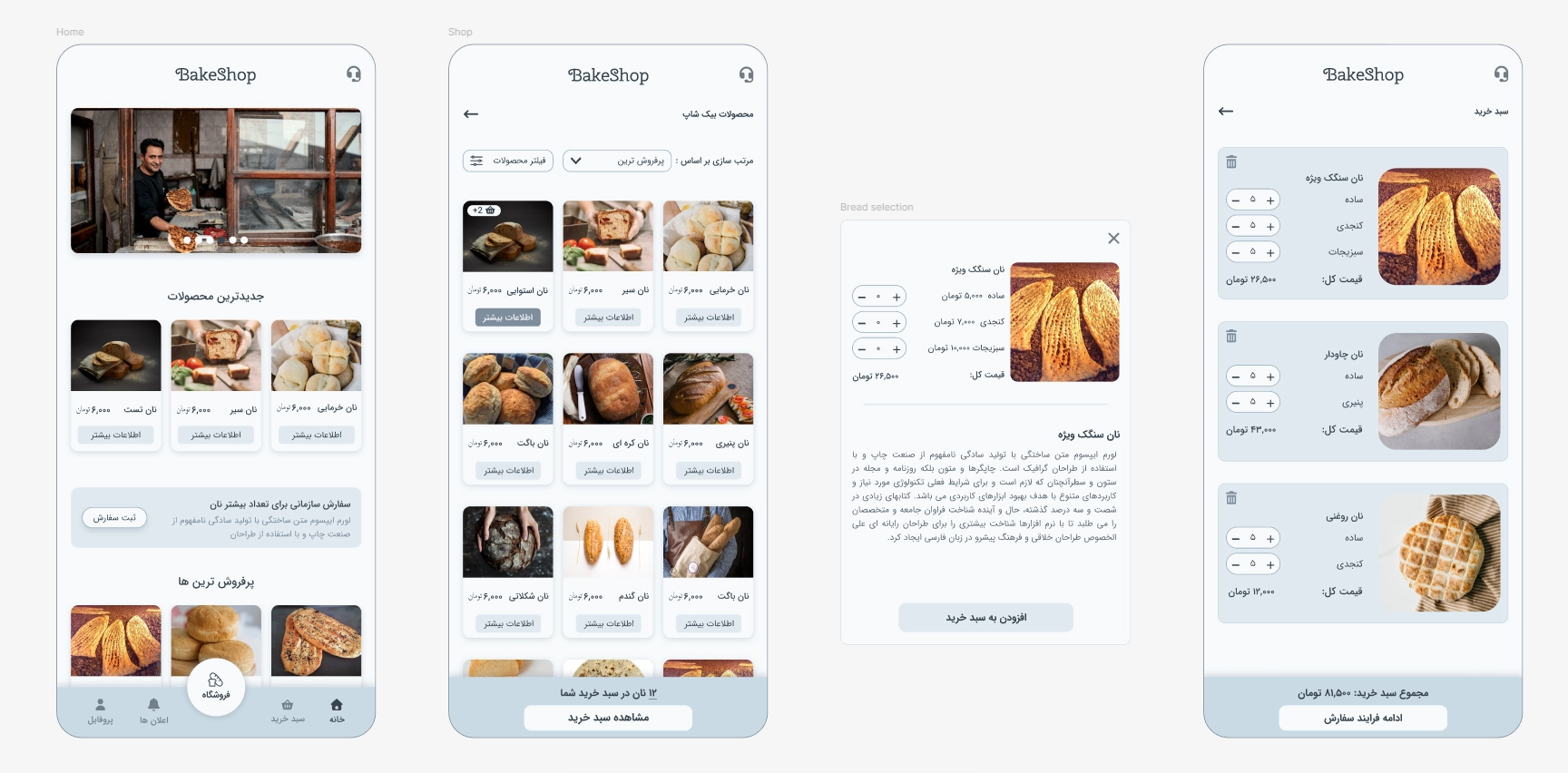
Visual Refinement
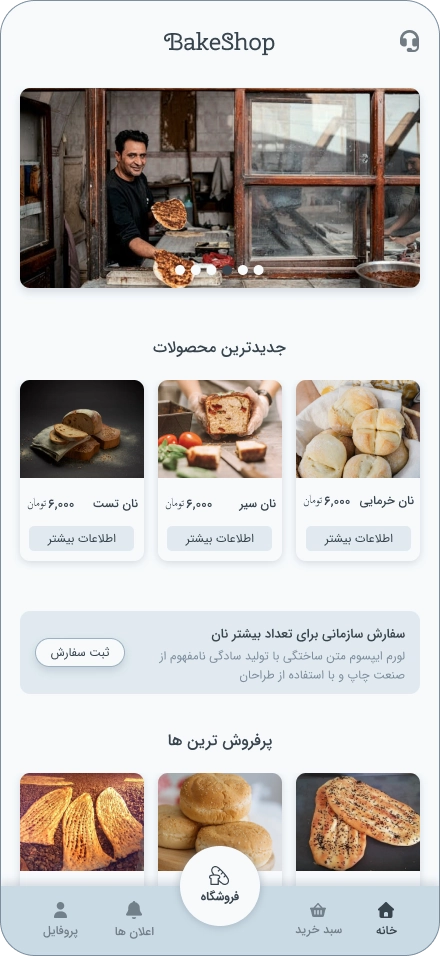
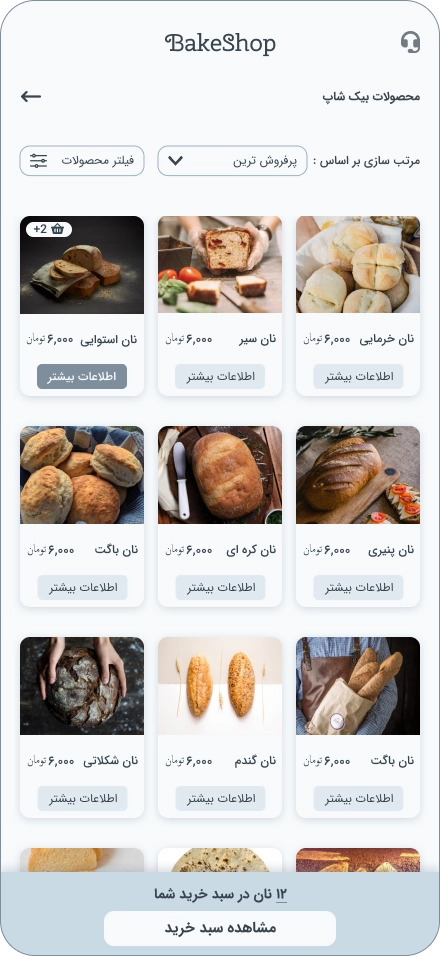
The visual refinement phase focused on strengthening hierarchy, improving product clarity, and creating a cleaner purchasing experience aligned with a modern bakery product identity.
Interface layouts, CTA visibility, and ordering components were refined to support smoother interactions across product browsing, customization, scheduling, and checkout flows.
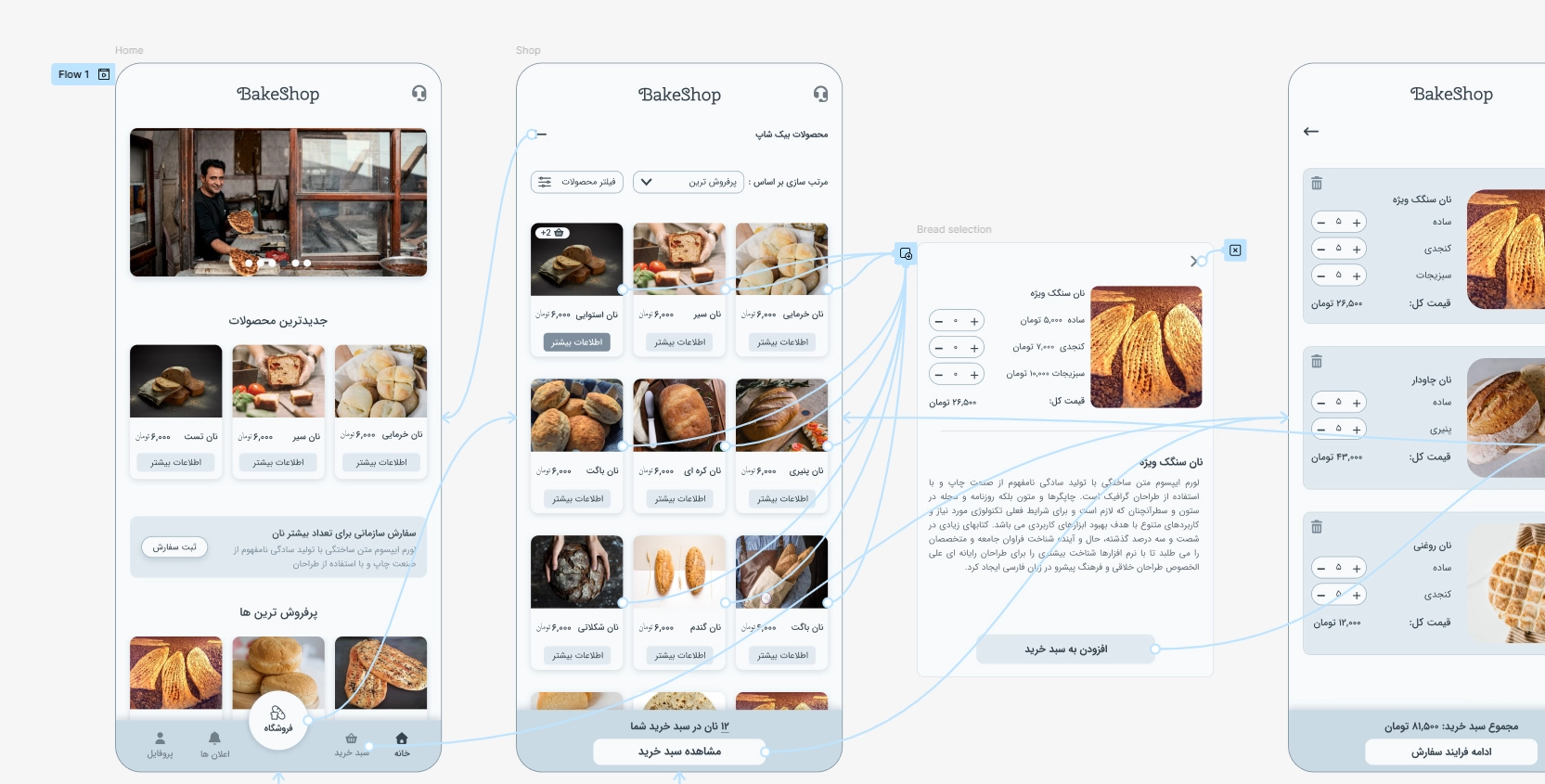
Final Prototype
Final prototypes refined interaction consistency, ordering feedback, and transition behaviors across the user journey.
The experience was designed to balance simplicity, speed, and flexibility while maintaining a clear and approachable interface throughout the ordering process.
From Physical Queues to a More Flexible Ordering Experience
The final design simplified the bread purchasing process by reducing queue-related friction and creating a more structured digital ordering flow.
Users could customize orders, combine multiple bread types within a single purchase, and schedule deliveries based on preferred time windows more efficiently.
The designed interaction flow also improved accessibility and usability by making key actions clearer, faster, and easier to complete across different user needs.
Reflections
This project explored how familiar everyday services can be improved through thoughtful UX decisions that prioritize convenience, flexibility, and efficient task completion in users’ daily routines.
Interested in collaborating or discussing a project?