WCL Digital Library
WCL Library is a digital reading platform designed to transform the traditional library experience into a more accessible and connected online service.
The project focused on simplifying book discovery, improving access to multiple reading formats, and creating a more flexible ecosystem for readers with different habits and lifestyles.
The platform combines physical books, eBooks, and audio-books within a unified experience while supporting personalized discovery, flexible reading behaviors, and seamless access to content.
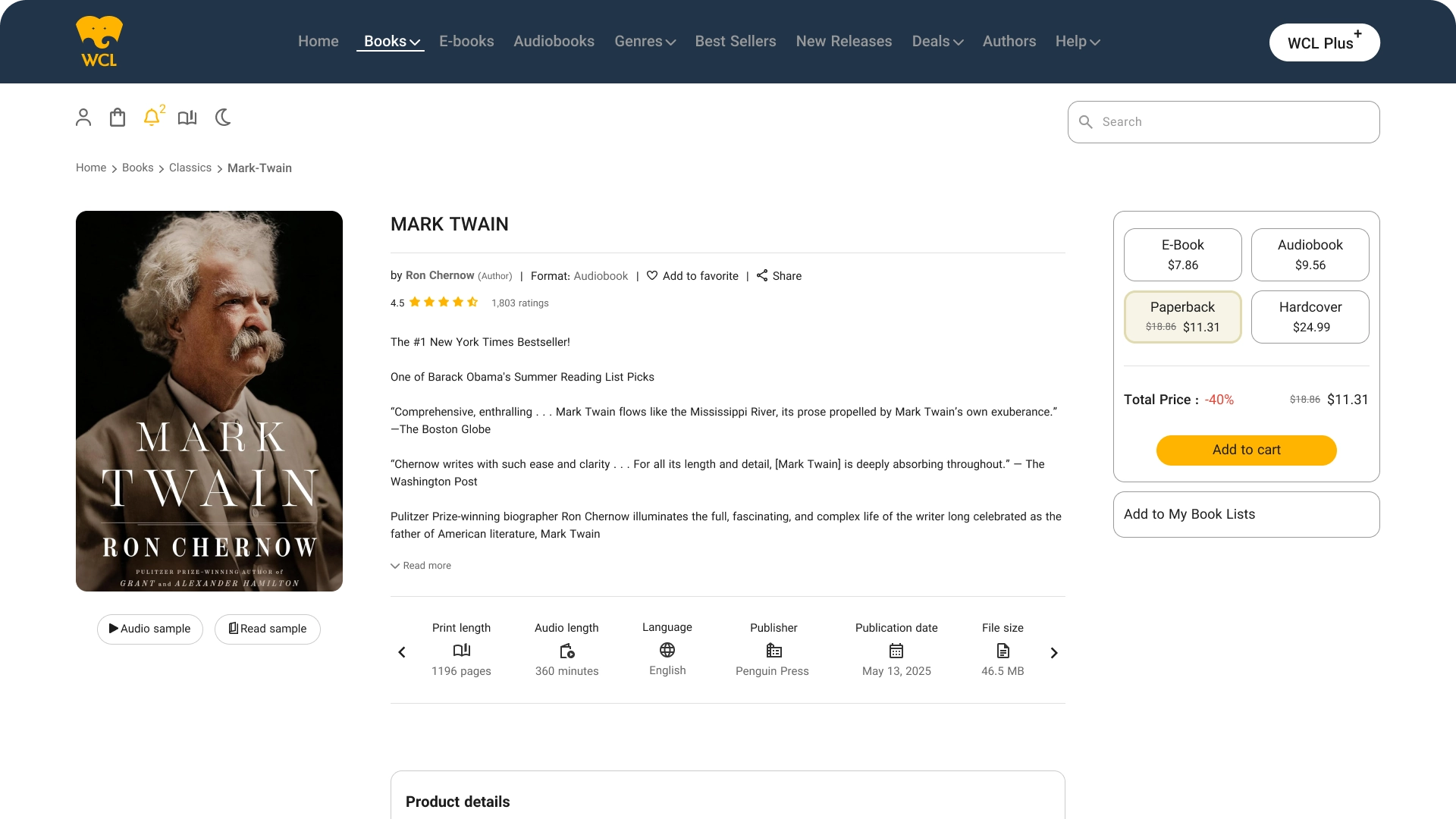
Fragmented Digital Reading Experience
Readers often rely on multiple disconnected platforms to discover books, follow authors, compare formats, access audiobooks, and complete purchases.
Many existing services lack clear categorization, seamless purchasing flows, flexible format support, and integrated reading tools such as note-taking or cross-device continuity.
The absence of personalized discovery systems and long-term engagement features also makes the overall reading experience feel fragmented and inefficient.
Building a Unified Reading Ecosystem
The goal of the project was to design a centralized and user-centered reading platform that simplifies book discovery, purchasing, and consumption across multiple formats.
The platform aimed to support personalized exploration, flexible reading behaviors, seamless online purchasing, and integrated reading tools while creating a more engaging and accessible experience for both traditional readers and audio-book users.
Additional goals included improving content discoverability, supporting long-term reading habits through campaigns and loyalty systems, and creating a more structured digital environment for focused reading and learning.
Research & Insights
Research focused on identifying friction points across digital reading, content discovery, purchasing workflows, and long-term engagement behaviors.
Key insights revealed recurring usability issues across existing platforms, including weak categorization systems, inefficient search experiences, limited personalization, and poor visibility into authors, narrators, and new releases.
Users also expected more flexible access to content formats and smoother transitions between discovery, purchase, listening, and active reading experiences.
These observations informed the platform’s navigation structure, discovery flows, reading environment, and engagement systems.
“Reading should adapt to people’s routines—not force people to adapt to rigid platforms.”
Approach
The design approach focused on reducing friction throughout the reading journey while creating a more flexible and accessible digital ecosystem across devices and content formats.
Focus:
- Simplifying discovery through clearer categorization, filtering, and personalized browsing flows
- Supporting flexible reading behaviors across physical books, e-books, and audio-books
- Improving long-term engagement through reading campaigns, loyalty systems, and personalized content visibility
Wireframing
Wireframes focused on structuring book discovery, format selection, purchasing flows, and reading interactions into a clearer and more intuitive experience.
Special attention was given to navigation hierarchy, content organization, filtering behavior, and reducing friction across search and browsing experiences.
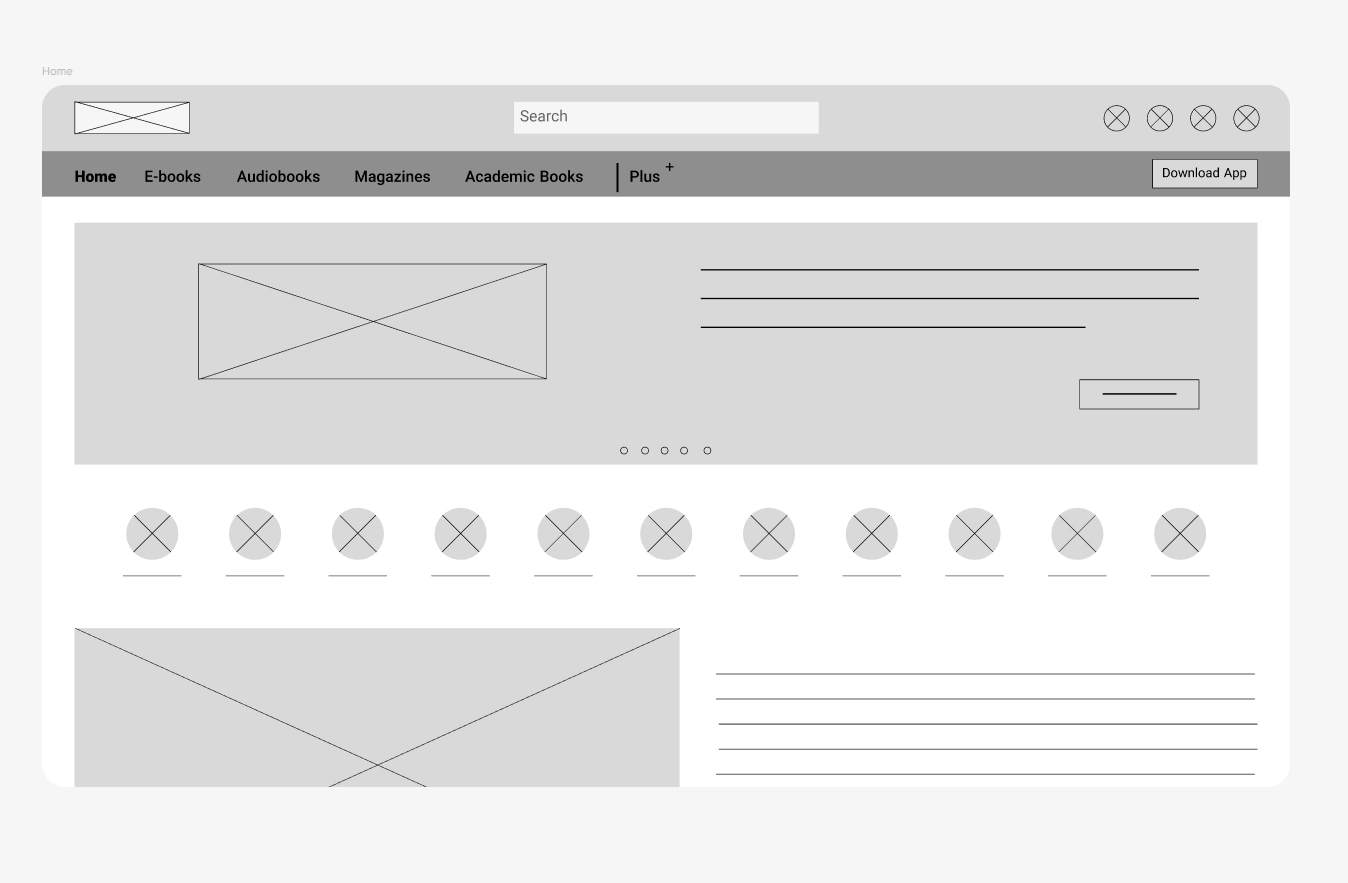
Low-Fidelity Exploration
Low-fidelity explorations were used to refine discovery patterns, reading flows, audio-book interactions, and cross-device behavior before introducing detailed interface styling.
The focus remained on improving usability, simplifying task completion, and ensuring users could move efficiently between discovery, purchase, and reading activities.
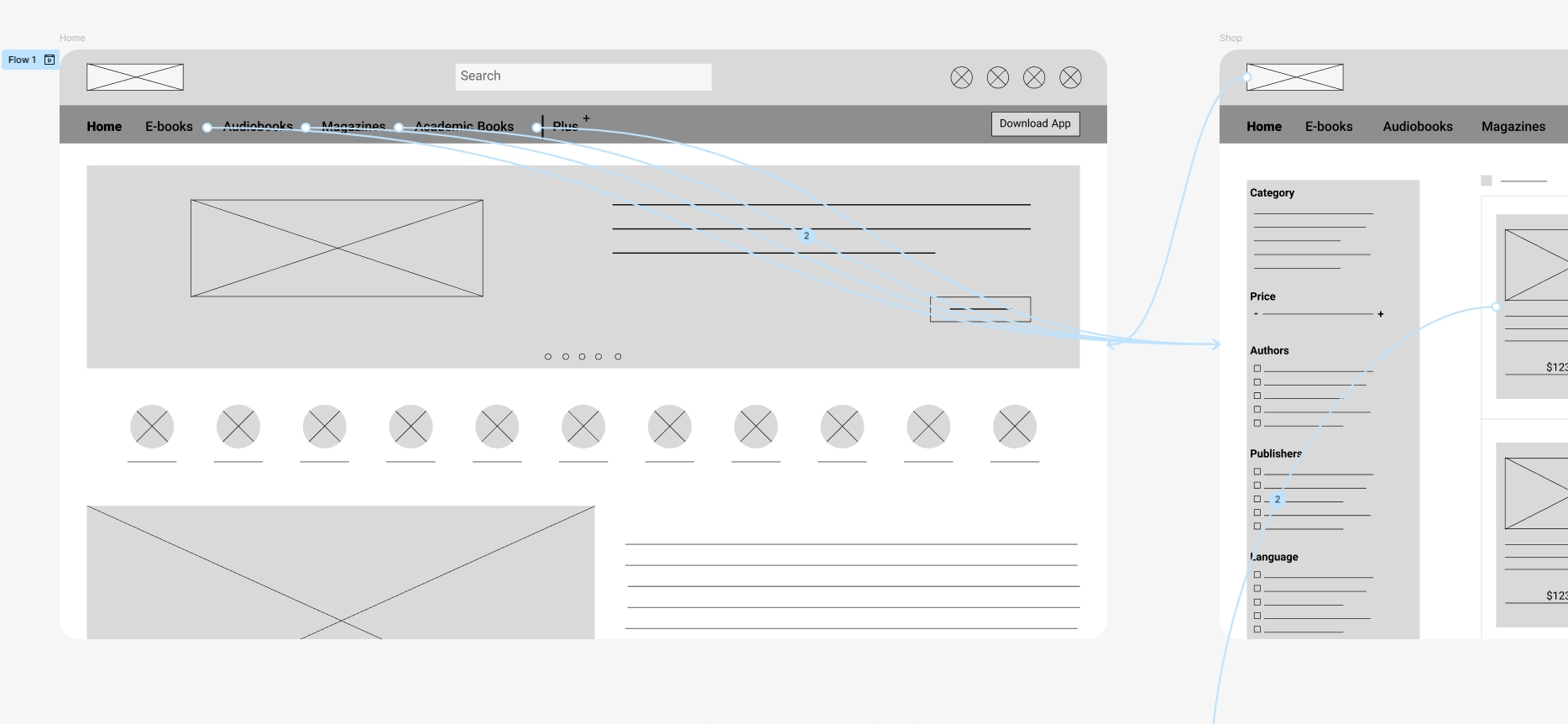
“A reading platform becomes valuable when discovery feels effortless and access feels immediate.”
Visual Refinement
The visual refinement phase focused on improving readability, strengthening content hierarchy, and creating a calmer and more focused reading environment.
Book layouts, category systems, audio-book sections, pricing visibility, and reading interfaces were refined to support faster scanning, clearer decision-making, and a more immersive experience across devices.
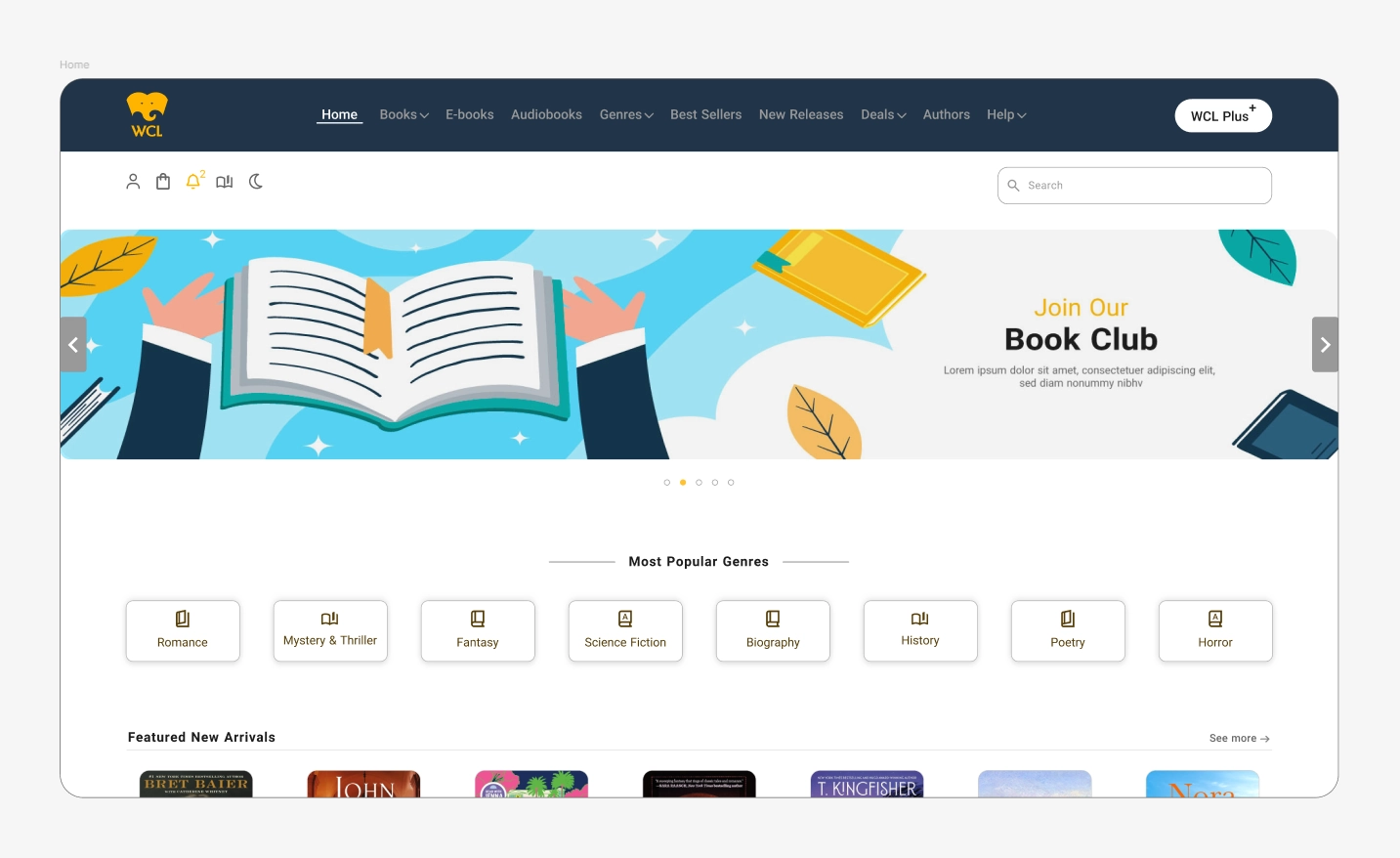
Final Prototype
Final prototypes refined interaction consistency, responsive behavior, and reading transitions across the complete platform experience.
Micro-interactions, reading states, and content transitions were designed to support a smoother experience between browsing, purchasing, listening, and active reading activities.
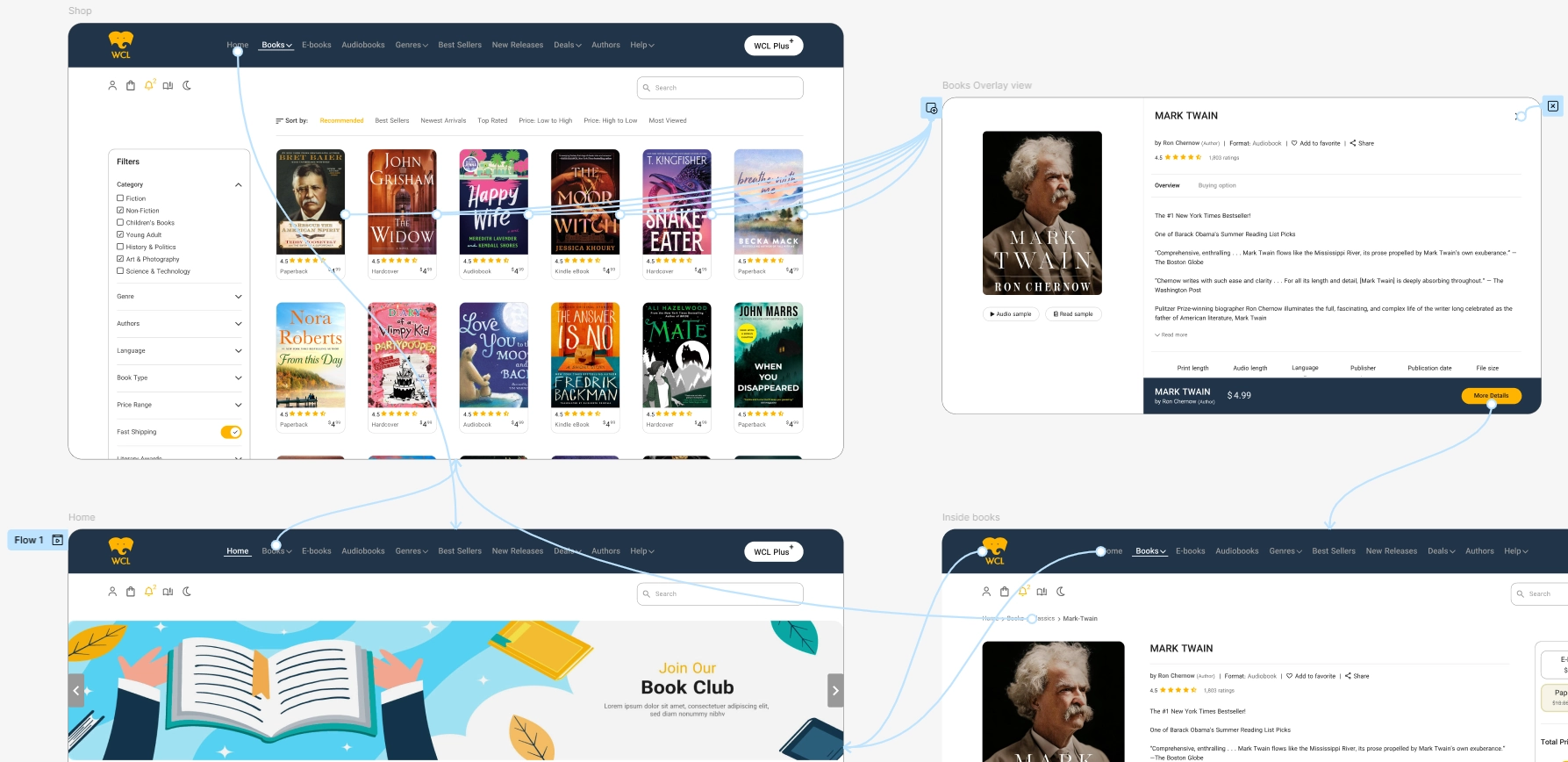
Creating a More Accessible & Connected Reading Experience
The final design transformed the traditional library experience into a more accessible digital ecosystem centered around discovery, flexibility, and continuous engagement.
Users can browse books across genres, follow authors and narrators, access physical, digital, and audio formats, and participate in reading campaigns within a unified platform experience.
The redesigned structure also improved usability and accessibility by simplifying discovery flows, reducing search friction, and supporting different reading behaviors across devices and contexts.
Reflections
This project explored how digital reading platforms can support different lifestyles, attention patterns, and learning behaviors through more flexible content access and thoughtfully structured discovery experiences.
Interested in collaborating or discussing a project?